
How to Rank Higher on Google: SEO Guide for Small Business
Table of Contents
1. Introduction
You’ve built a great business. You offer quality products or services, your customers love what you do, and you’re ready to grow. But there’s a problem: when potential customers search for what you offer on Google, your business is nowhere to be found.
You’re not alone. Research shows that while 93-98% of Australians use Google to find local businesses, only 36% of Australian small businesses use SEO effectively. That means 64% of your competitors aren’t showing up either—representing a massive opportunity for businesses willing to invest in their online visibility.
SEO (Search Engine Optimisation) might feel overwhelming, especially when you’re already juggling everything else that comes with running a small business. This guide explains what SEO is, why it matters for Australian businesses, and how to approach it strategically—whether you decide to handle basics yourself or partner with professionals who can accelerate your results.
Let’s talk about how to get your business found by the customers who are already searching for what you offer.
2. What Is SEO and Why Does My Small Business Need It?
SEO improves your website’s search engine ranking.
Mark runs a plumbing business in Adelaide. He’s skilled, reliable, and his existing customers rave about his work. But when someone in Adelaide Hills searches “emergency plumber near me” at 10 PM with a burst pipe, Mark’s business doesn’t appear. His competitors do. That midnight emergency call—and dozens like it each month—goes to someone else.
SEO (Search Engine Optimisation) is the practice of improving your website so it appears higher in search engine results when people look for businesses like yours. Think of it as making your business visible at the exact moment potential customers are searching for your services.
Why it matters for your business:
Google holds 93.95% of the search market in Australia. When Australians need something, they search on Google. Research reveals that 46% of all Google searches in Australia have local intent—people looking for businesses in their area. The businesses that appear in those top positions win the customers.
Here’s what makes SEO particularly valuable: the first position on Google in Australia has a click-through rate of 29.5-39.8%—that’s nearly 40% of all searchers clicking the top result. By position five, that drops dramatically. Being visible in those top spots isn’t just nice to have; it’s the difference between growth and stagnation.
The investment perspective: Unlike paid advertising that stops the moment you stop paying, SEO builds digital assets—content, rankings, authority—that appreciate over time. Your investment compounds, delivering increasing returns as your site gains credibility. It’s one of the few marketing investments that gets easier and more effective the longer you sustain it.
The honest reality: SEO takes time and strategic expertise. Results typically take 6-12 months to materialise, and success depends on executing the right tactics in the right sequence. That’s why many businesses choose to work with experienced professionals who can navigate the complexities and accelerate the timeline.
3. How Search Engines Work: The Basics Every Owner Should Know
Search engines crawl, index, and rank websites based on relevance and quality.
Understanding how Google works doesn’t require a computer science degree, but knowing the basics helps you make smarter decisions about your business website and digital strategy.
Google follows a three-step process: crawling (discovering your pages), indexing (cataloguing your content), and ranking (deciding which pages best answer each search query). It considers hundreds of factors: content relevance, site speed, mobile experience, backlink quality, user engagement signals, and many more.
What this means for your business: You need to make it easy for Google to find, understand, and trust your website. That means having a clear site structure, quality content that answers customer questions, technical excellence, and signals of authority and credibility.
Here’s a common misconception: Google doesn’t automatically know about your business just because you have a website. You need to actively help Google discover and understand what you offer through strategic optimisation across technical, content, and authority factors.
The challenge? These factors interact in complex ways, algorithm updates constantly shift priorities, and what works in one industry might not work in another. This complexity is exactly why SEO expertise delivers such significant value—professionals understand not just individual tactics, but how to orchestrate them into an effective strategy for your specific situation.
4. What Is Local SEO and How Does It Work?
Local SEO targets customers in your specific geographic area.
Sarah runs a coffee shop in Bondi Beach, boasting a prime location and excellent coffee. But when tourists and locals search “coffees near Bondi Beach,” her coffee shop doesn’t appear in the results. Despite being meters from the beach, she’s invisible to the very people walking past, looking for exactly what she offers.
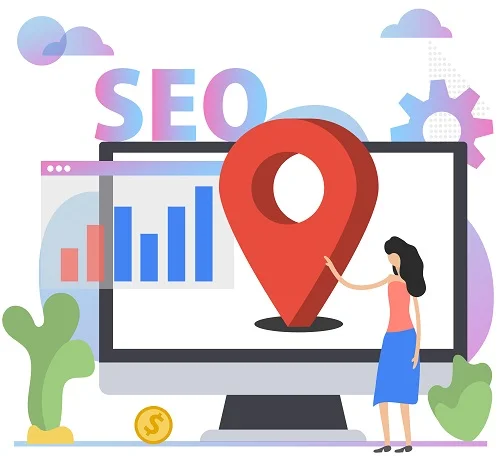
Local SEO is the practice of optimising your online presence to attract customers from your geographic area. It’s particularly crucial for businesses with physical locations or those serving specific regions.
Why local SEO matters for Australian businesses:
Research shows that 97-98% of Australians use Google to look for local businesses nearby. Even more striking, 91% of Australians use Google Search before entering a physical store—meaning they’re researching you online before they walk through your door. And here’s the opportunity: 88% of local mobile searches result in either a phone call or visit within 24 hours.
The “near me” revolution: Searches for businesses “near me” grew by 500% over two years in Australia. When someone searches “electrician near me” or “accountant near me,” Google shows businesses close to their current location. If you’re not optimised for local search, you’re invisible to these high-intent customers.
How local SEO differs from general SEO
Traditional SEO tries to rank your website nationally or globally. Local SEO focuses on appearing in location-specific searches and Google’s “Local Pack”—those three businesses with map pins that appear at the top of local search results.
Local SEO success depends on multiple interconnected factors: Google Business Profile optimisation, consistent business information across the web, location-specific content and keywords, customer reviews and reputation management, local backlinks, and technical location signals. Each element reinforces the others—which is why comprehensive local SEO strategies deliver far better results than piecemeal efforts.
The bottom line
If you serve customers in a specific area—whether that’s a single suburb or an entire state—local SEO should be your first priority. It’s often faster to see results than traditional SEO and directly connects you with ready-to-buy customers in your area.
Many businesses find that professional local SEO support pays for itself quickly through increased visibility in their service area. If you serve customers in a specific location, we’d be happy to discuss how local SEO could impact your business. Contact us to explore your local SEO opportunities.
5. How Do I Get Found by Customers Near Me?
Optimise your online presence with location indicators, consistent business information, and geographic relevance.
Michael owns an electrical business in Richmond, Melbourne. He’s competing against large electrical franchises with bigger marketing budgets. How does a small business compete? By dominating local search through strategic optimisation.
Getting found locally requires coordinated optimisation across multiple factors, such as:
Location signals and consistency: Your business information (Name, Address, Phone) must be identical everywhere it appears online. Google uses this consistency as a trust signal. Even small discrepancies confuse Google and hurt rankings.
Geographic relevance: This includes location-specific keywords in your content, dedicated pages for service areas, local business schema markup, and content that demonstrates genuine connection to your community.
Local authority indicators: Customer reviews, local business directory listings, backlinks from local organisations, and engagement with local events all signal to Google that you’re an established, trusted local business.
Visibility in local search results: Getting your business shown in the Google Map Pack (those top three businesses with map pins) and appearing in “near me” searches requires technical expertise in local SEO factors.
The challenge is that these elements need to work together strategically. Random tactics deliver random results. A cohesive local SEO strategy—where every element reinforces the others—delivers predictable growth in local visibility.
Our local SEO services focus specifically on helping Australian businesses dominate their local search results. We handle the complexity so you can focus on serving the customers we help you attract.
6. Google Business Profile: Your Free Local SEO Tool
Google Business Profile is the foundation of local search visibility.
Consider two plumbing businesses in the same suburb. Both have similar experience and pricing. But when someone searches “plumber near me,” only one appears in the Google Map Pack with photos, reviews, contact information, and business hours. Which one gets the call? The visible one, every time.
Your Google Business Profile (formerly Google My Business) is perhaps the single most important factor for local SEO success. It’s free, but optimising it correctly requires understanding dozens of specific elements that influence rankings.
Why it’s crucial:
Complete, optimised Google Business Profiles attract seven times more clicks than incomplete ones. The average properly optimised profile generates 67 actions per month (calls, website visits, direction requests). That’s 67 potential customers taking action—if your profile is set up correctly.
What optimisation involves:
Setting up a Google Business Profile is straightforward. Optimising it for maximum visibility is another matter entirely. It requires selecting the right primary and secondary categories (this alone significantly impacts when you appear), writing keyword-optimised descriptions within character limits, implementing a photo strategy (businesses with photos receive 42% more direction requests), creating strategic weekly posts, managing and responding to reviews according to Australian Consumer Law requirements, and monitoring performance data to refine your approach.
Here’s what many businesses miss: 55% of Australian businesses haven’t even claimed their Google Business Profile. Of those who have, most complete only the basic fields. This creates an opportunity—proper optimisation often delivers quick visibility wins against under-optimised competitors.
The reviews factor: 87% of Australian consumers use Google reviews to evaluate local businesses, and 71% won’t consider a business with less than a 3-star rating. Building and managing a strong review profile requires a systematic approach that complies with ACCC regulations while encouraging satisfied customers to share their experiences.
If you want your Google Business Profile to work as hard as possible for your business, our Google Business Profile service handles complete setup, optimisation, and ongoing management. Let’s talk about maximising your local visibility.
7. What Keywords Should I Use for My Small Business?
Target keywords that match how your customers actually search for your services.
When James launched his Byron Bay surf shop website, he optimised everything for “surfboards.” Logical, right? But his target customers weren’t searching “surfboards”—they were searching “learn to surf Byron Bay,” “surf lessons for beginners,” and “surf equipment rental Byron Bay.” By targeting the wrong keywords, he was invisible to his actual market.
Keywords are the search terms people type into Google when looking for businesses like yours. Choosing the right keywords is foundational to effective SEO—but it’s more strategic than simply picking terms related to your business.
Understanding search intent:
Not all keywords are equal. Someone searching “what is SEO” is learning. Someone searching “SEO services Melbourne” is considering options. Someone searching “SEO agency Melbourne pricing” is ready to buy. An effective keyword strategy targets the full customer journey, matching content to where prospects are in their decision process.
The keyword research challenge:
Finding the right keywords requires balancing multiple factors: search volume (enough people searching to matter), competition level (can you realistically rank?), commercial intent (will it drive business?), and relevance (does it match what you actually offer?). It also requires understanding Australian spelling preferences—80% use “optimisation” not “optimization”—and local search patterns.
Tools exist for keyword research (Google Keyword Planner, Ahrefs, SEMrush), but interpreting the data and building an effective keyword strategy requires expertise. A strategic keyword plan identifies:
- High-priority terms worth competing for
- Long-tail variations with less competition
- Question-based keywords for content targeting
- Local keyword opportunities
- Gaps in competitor coverage you can exploit
The strategic approach:
Effective keyword targeting goes beyond individual terms. It’s about building topical authority through comprehensive content that targets keyword clusters—groups of related terms that signal expertise in a subject area. This approach (often called the hub-and-spoke model) delivers better rankings and more sustainable visibility than targeting isolated keywords.
Many businesses find that professional keyword research and strategy development accelerate their SEO success significantly. If you’d like to understand which keywords could drive qualified traffic to your business, our SEO services include comprehensive keyword research and strategic planning. Let’s discuss your keyword opportunities.
8. On-Page SEO: Optimising Your Website Content
On-page SEO ensures search engines and users understand your content’s relevance and value.
Rachel runs an accounting firm in Hobart. Her website explains her services clearly, but it’s not ranking. The problem? Her homepage title tag reads “Home – Southern Ledger Accounting.” No keywords, no location, no indication of what the business actually does. Google has no idea what to rank this page for.
On-page SEO involves optimising the elements on each page to communicate relevance to search engines while maintaining an excellent user experience. It’s the foundation that makes all other SEO efforts more effective.
The critical elements:
Title tags are clickable headlines in search results and appear at the top of browser tabs. They’re one of the most important ranking factors. Strategic title tags balance keyword inclusion, character limits, click appeal, and brand inclusion.
Meta descriptions influence click-through rates. They’re your advertisement in search results, requiring compelling copy that includes keywords and clear value propositions within strict character limits.
Header structure (H1, H2, H3) signals content hierarchy and importance. Strategic header optimisation helps both search engines and users understand your content organisation and key topics.
Content quality and depth determine how well Google understands your expertise and how well pages satisfy user intent. This involves keyword integration, comprehensive topic coverage, readability optimisation, and providing genuine value.
Technical on-page factors include URL structure, internal linking, image optimisation, schema markup, and page speed—all contributing to how well search engines crawl, understand, and rank your pages.
The complexity: Each element interacts with others. A perfectly optimised title tag won’t help if the content is thin. Great content won’t rank if technical factors prevent proper indexing. Effective on-page SEO requires understanding how these elements work together and optimising them cohesively.
This is where professional expertise delivers significant value—knowing not just what to optimise, but how to balance multiple factors for maximum impact. Our SEO services include comprehensive on-page optimisation that addresses all elements strategically.
9. Writing SEO-Friendly Content That Converts
Effective content serves both search engines and human readers with valuable, comprehensive information.
Tom’s auto mechanic website in Geelong has basic SEO in place. But his service pages are three sentences long: “We fix cars. We’re experienced. Call us.” Compare that to a competitor whose “Brake Service Geelong” page explains brake warning signs, describes the service process, includes pricing transparency, shows before/after photos, and features customer testimonials. Who do you trust more?
Content is where SEO meets customer conversion. You need depth and quality for Google to understand your expertise, and valuable information for customers to trust you.
What makes content effective for SEO:
Content needs to answer user questions comprehensively, naturally include relevant keywords, provide unique value, demonstrate expertise and trustworthiness (E-E-A-T), be structured for readability, and include clear calls-to-action. The balance between these factors determines success.
Strategic content considerations:
Length matters, but only when it adds genuine value. Top-ranking pages often contain 1,500-2,500 words because comprehensively answering questions naturally requires depth, but thin content that hits a word count delivers poor results.
Content structure impacts both SEO and conversion. Short paragraphs, clear subheadings, strategic bolding, and scannable formatting help users find information quickly while signalling content organisation to search engines.
The challenge? Creating content that ranks well and converts consistently requires understanding keyword integration, topic comprehensiveness, user psychology, technical SEO factors, and conversion optimisation—skills that take time to develop.
The content compound effect:
Quality content builds digital assets that appreciate over time. A comprehensive guide written today can attract customers for years, accumulate backlinks, and establish authority. This is why strategic content investment delivers compounding returns—unlike ads that stop working the moment you stop paying.
Many businesses find that professional content strategy and creation accelerate their results while ensuring quality and effectiveness. If content creation feels overwhelming or you’re not seeing results from current efforts, let’s talk about how we can help.
10. How Fast Should My Website Load for Good SEO?
Page speed has a direct impact on rankings, user experience, and conversion rates.
Imagine walking into a shop where the door takes 10 seconds to open. You’d leave, right? That’s exactly what happens with slow websites. Research shows nearly half of visitors leave if a site takes longer than 3 seconds to load.
Why page speed matters:
Google uses page speed as a direct ranking factor, particularly for mobile searches. But the bigger impact is on user experience and conversions. Every second of delay reduces customer satisfaction and conversions. Faster sites rank higher, keep visitors longer, and convert better.
Your website should load in under 3 seconds on both desktop and mobile. Under 2 seconds is ideal. But achieving this requires technical optimisation across multiple factors: image optimisation and compression, code minification and combining, caching implementation, server response time, content delivery networks, render-blocking resource elimination, and mobile-specific optimisation.
The technical challenge:
Speed optimisation requires technical expertise to diagnose issues, implement solutions without breaking functionality, and balance speed with design and feature requirements. What seems like a simple issue (slow loading) often has multiple interconnected causes requiring specialised knowledge to resolve.
With 55% of Australians preferring to browse on mobile devices, and 84% of “near me” searches conducted on mobile, mobile speed is critical. Mobile optimisation adds additional complexity because mobile networks are slower and mobile devices have less processing power.
If technical speed optimisation feels overwhelming, this is one area where professional help often pays for itself quickly. A fast site immediately improves user experience and can positively and quickly impact rankings. Contact us to discuss speed optimisation for your site.
11. Mobile-First SEO: Why Your Site Must Work on Phones
Google uses mobile-first indexing—your mobile experience determines rankings.
Picture this: A potential customer searches for your services on their phone while sitting at a café. They click on your website. The text is tiny, they have to pinch and zoom to read anything, buttons are impossible to tap accurately, and the page takes forever to load. They hit back and click your competitor instead.
The mobile reality in Australia:
97% of Australians own smartphones, and 55% prefer browsing on mobile over desktop. More critically, 57% of local searches happen on mobile devices, and 78% of mobile local searches result in an offline purchase within 24 hours. If your site doesn’t work flawlessly on mobile, you’re losing customers at the moment they’re ready to buy.
Google uses mobile-first indexing, meaning it primarily uses the mobile version of your site for ranking and indexing. If your mobile site is poor, your rankings suffer—even for desktop searches.
Mobile optimisation requirements:
Responsive design that adapts to any screen size, touch-friendly elements sized for easy tapping, readable text without zooming, simplified navigation, fast mobile loading, and mobile-specific conversion optimisation all contribute to mobile success.
But true mobile optimisation goes deeper. It requires understanding mobile user behaviour, optimising for mobile conversion paths, ensuring forms work smoothly on small screens, and testing across devices and browsers. Many sites look “responsive” but fail in actual mobile usability and conversion.
Mobile optimisation is technical, detailed work that significantly impacts both rankings and revenue. Professional mobile optimisation ensures your site not only looks good but actually converts mobile visitors into customers.
12. How Often Should I Post Content for SEO?
Consistent, quality content signals relevance and builds topical authority over time.
“How often should I blog?” is one of the most common questions from small business owners. The honest answer? It depends on your goals, resources, competition, and content quality. But there’s a strategic balance between consistency and quality that determines success.
Content frequency and SEO
Google rewards websites that consistently publish fresh, valuable content. Regular publishing signals that you’re active, relevant, and authoritative. However, one exceptional piece of content per month beats four rushed, thin blog posts every week.
Research shows that companies publishing 16+ times monthly get substantially more traffic than those publishing 0-4 times monthly. But before you panic about publishing daily, consider this: those companies often have dedicated content teams. For small business owners, sustainability matters more than volume.
The strategic approach
Effective content strategy balances frequency with quality, targets the right keywords at the right stages of the customer journey, builds topical authority through comprehensive coverage, updates existing content to maintain freshness, and measures what actually drives business results—not just traffic.
Content also builds on itself over time. A comprehensive guide written today attracts visitors for years, accumulates backlinks, and establishes authority. Older content often ranks better than new content because it’s had time to earn trust and links. This is why consistency beats intensity—steady content creation over 12 months outperforms a burst of activity followed by silence.
The reality for busy business owners
Creating truly effective content requires keyword research, competitor analysis, writing skills, SEO knowledge, editing, optimisation, and promotion. For time-poor business owners, this often becomes unsustainable—which is why many businesses partner with professionals who can maintain consistent, strategic content production.
If content creation feels overwhelming or you’re not seeing results from current efforts, professional content strategy and creation services can accelerate your SEO success significantly. Let’s discuss how we can support your content needs.
13. What Are Backlinks and How Do I Get Them?
Backlinks from quality websites signal authority and trustworthiness to search engines.
Think of backlinks as votes of confidence. When another website links to yours, they’re essentially telling Google: “This site has valuable information worth sharing.” Google views these links as trust signals. Sites with more high-quality backlinks typically rank higher.
Backlinks are one of Google’s top three ranking factors. Research shows top-ranking pages have substantially more backlinks than lower-ranking pages. But quality matters far more than quantity—one link from a respected industry publication is worth more than 100 links from random directories.
The challenge of building quality backlinks
Effective link building requires creating genuinely linkable content, building relationships with relevant websites, understanding outreach strategies that work, avoiding black-hat tactics that risk penalties, and being patient—quality backlinks take time to earn.
Common approaches include creating comprehensive, valuable content that naturally attracts links, developing local partnerships and sponsorships, contributing expert content to industry publications, becoming a source for journalists and media, and building presence in quality business directories. Each approach requires different skills and time investments.
What to avoid?
Buying backlinks or participating in link schemes risks severe Google penalties that can remove your site from search results entirely. The short-term gain isn’t worth the long-term risk. This is why professional link building focuses on legitimate, sustainable tactics that build genuine authority.
The expertise factor
Effective link building combines content creation, relationship building, outreach skills, technical SEO knowledge, and risk management. It’s time-intensive work that benefits significantly from experience and established relationships.
Many businesses find that professional link-building services deliver better results faster than DIY efforts. If building backlinks feels daunting or you need to accelerate authority building, our SEO services include strategic link building that focuses on quality, relevance, and sustainable growth.
14. How Do I Know If My SEO Is Working?
Track rankings, traffic, and conversions to measure SEO success and identify opportunities.
You’ve invested time or money into SEO. How do you know if it’s actually working? Without proper tracking and interpretation, you can’t see what’s effective, what needs adjustment, and where to focus efforts.
Essential measurement
Google Analytics shows who visits your site, how they found you, and whether they convert. Google Search Console reveals how your site performs in Google search—which keywords you rank for, your positions, and technical issues. Google Business Profile Insights displays local search performance.
But having tools installed is just the beginning. The real value comes from knowing what to track, how to interpret data, identifying meaningful patterns versus noise, and translating insights into strategic action.
Key metrics include: organic traffic trends, keyword ranking movements (especially positions 4-10 moving to 1-3), click-through rates, conversion rates, and top-performing pages. But understanding which metrics matter for your specific business goals, and how to improve them, requires expertise.
The interpretation challenge
SEO data can be overwhelming and sometimes contradictory. Traffic increased, but conversions dropped—why? Rankings improved, but traffic didn’t—what happened? A keyword moved up five positions—is that significant? Answering these questions and making correct strategic adjustments requires experience.
Many businesses have analytics installed, but struggle to extract actionable insights. Professional SEO includes not just optimisation but strategic measurement, interpretation, and ongoing refinement based on data. If you’re tracking metrics but unsure what they mean or what to do next, that’s exactly where expert guidance delivers value.
15. How Long Does SEO Take to Show Results?
SEO typically takes 6-12 months for meaningful results, with variables affecting the timeline.
This might be the most important section in this entire guide, because unrealistic expectations are the number one reason businesses abandon SEO too early.
“How long until I see results?” John, a Canberra plumber, asked after two months of SEO work. His rankings had barely moved, and he was ready to quit. The reality: the average top-10 ranking page is around two years old. Pages ranking number one on Google are almost three years old on average. Understanding this didn’t discourage John—it gave him realistic expectations. He continued, and by month six, he was seeing consistent growth.
Realistic SEO timeline
Months 1-3: Foundation work with minimal visible ranking changes. This is when technical issues are fixed, content is optimised, and Google begins processing changes. It’s normal to see little movement—and sometimes a temporary decline as Google tests rankings.
Months 4-6: Early results emerge. Rankings improve for some keywords, particularly long-tail terms. Traffic might increase 10-30% from baseline. Some businesses see results sooner in less competitive niches.
Months 6-12: Meaningful growth. Rankings continue improving, traffic often increases 50-150% from the starting point, and business impact becomes measurable through increased inquiries and sales.
12+ months: Compounding returns. Established content gains authority, rankings stabilise at higher positions, and growth becomes more predictable and sustainable.
Variables affecting the timeline
Brand new websites take longer (8-12+ months) because they lack domain authority. Established sites see faster results (3-6 months). Competition level matters enormously—low-competition local keywords might rank in 2-3 months; highly competitive industries can take 12-18 months even for experts. Content frequency, technical site quality, and whether you combine SEO with other marketing all impact speed.
The professional advantage
Experienced SEO professionals accelerate timelines through expertise in prioritisation (tackling highest-impact factors first), avoiding mistakes that delay results, leveraging proven strategies, and efficiently executing complex technical work. What might take a business owner 12 months to achieve through trial and error, professionals can often accomplish in 6-8 months.
The honest truth: if someone promises first-page rankings in 30 days, they’re either targeting extremely low-competition keywords, using risky tactics, or being dishonest. Sustainable SEO results take months of strategic effort. But once you’re ranking well, maintaining those positions requires far less effort than achieving them initially—that’s the long-term value of SEO investment.
16. SEO vs. Paid Ads: What Works Better for Small Businesses?
SEO builds long-term assets; ads provide immediate traffic—most businesses benefit from a strategic combination.
“Should I invest in SEO or Google Ads?” The right question is: “What mix of SEO and paid advertising suits my business goals, timeline, and budget?”
How they differ
SEO builds organic visibility over time. You don’t pay per click, but you invest in optimisation. Results take months but compound over time. Once ranking well, you maintain visibility without ongoing ad spend—your content becomes a digital asset that appreciates.
Paid ads provide immediate visibility. You pay for each click, and visibility stops when you stop paying. Results are instant but require continuous investment.
Strategic approach
The most successful businesses use both strategically. Run paid ads for immediate traffic and leads while SEO builds momentum. Use ads to test keywords and messaging, then target proven keywords with SEO for long-term organic rankings. Rank organically for informational keywords while running ads for highly competitive commercial terms.
ROI perspective
SEO typically delivers 5-10x ROI long-term, though it requires patience and upfront investment. Paid ads provide a predictable 2-4x ROI immediately but require continuous spend. The “best” option depends on your timeline, budget, goals, and competitive landscape.
Australian small businesses allocate an average of $1,200 per month for SEO services. That investment builds assets (content, rankings, authority) that continue delivering value long after the work is done. Compare that to ad spend that delivers value only while actively running.
The strategic question isn’t “SEO or ads?”—it’s “How should I allocate budget across immediate and long-term visibility to achieve my business goals?” If you’d like to discuss the right strategy mix for your specific situation, we’re here to have an honest conversation about what makes sense for your business.
17. What SEO Mistakes Are Hurting My Rankings?
Common mistakes include technical errors, poor content, and outdated tactics that actively harm rankings.
Even businesses investing in SEO often sabotage their efforts through common mistakes: keyword stuffing (unnatural keyword cramming), ignoring mobile users, slow page speed, duplicate content issues, thin or low-quality content, neglecting local SEO factors, poor internal linking, technical SEO errors, inconsistent NAP (business information), buying backlinks or using black-hat tactics, giving up too early (before results emerge), and not tracking or interpreting results correctly.
The diagnosis challenge
Identifying which mistakes affect your specific site requires technical expertise. A site might have dozens of issues, but only 3-4 actually impact rankings significantly. Knowing which to fix first (highest impact, feasible to address) requires experience.
Some mistakes are obvious (the site doesn’t work on mobile). Others are subtle (canonical tag issues, crawl budget problems, duplicate content from technical causes). The most damaging issues often aren’t the most visible—which is why professional SEO audits identify problems business owners didn’t know existed.
The fix strategy
Effective problem-solving requires comprehensive technical auditing, strategic prioritisation (impact versus effort), correct implementation (fixing without breaking other things), verification that fixes actually improved rankings, and ongoing monitoring.
Many businesses waste time fixing low-impact issues while critical problems go unaddressed. Or they fix issues incorrectly, creating new problems. Professional SEO expertise ensures you’re addressing the right issues, in the right order, in the right way.
If you’re concerned about what might be hurting your rankings, our SEO audit service provides a comprehensive analysis of technical, content, and authority factors—along with prioritised recommendations for maximum impact. Contact us to discuss an SEO audit for your site.
18. Should I Do SEO Myself or Hire an Agency?
DIY works for basic optimisation; professional services deliver faster, more comprehensive results.
Standing in a hardware store holding a how-to book on plumbing, you might wonder: “Should I fix this myself or call a professional?” SEO presents the same decision. The answer depends on your situation, not a universal rule.
When DIY might make sense
You have significant time to invest (5-10 hours weekly), a willingness to continuously learn (SEO changes constantly), a relatively simple website (under 50 pages), limited competition in your niche, a tight budget (under $1,000 monthly), and comfort with technology.
Even then, many businesses find they can handle certain basics (claiming Google Business Profile, writing content) but need professional support for technical optimisation, strategic planning, link building, and ongoing refinement.
When professional help delivers clear value
Limited time (SEO is extremely time-intensive), complex website (e-commerce, technical issues), highly competitive industry, budget for investment ($1,500+ monthly), need for faster results (expertise accelerates timelines), and previous failed DIY attempts all indicate professional support makes sense.
What professionals provide
Deep expertise in technical optimisation, competitive analysis, advanced keyword research, strategic content planning, effective link building, staying current with constant algorithm changes, and, most valuable, time savings. If your time is worth $100+ per hour, and you’d spend 10 hours weekly on SEO, that’s $4,000+ monthly of opportunity cost. Professional services at $1,500-3,000 monthly become efficient when you factor in both time saved and superior results from expertise.
Choosing the right SEO partner
Look for agencies with transparent processes (they explain what they’ll do and why), realistic timelines (6-12 months for meaningful results, not “page one in 30 days”), strategic customised approach (audit first, then strategy specific to your business), white-hat methods only (ethical practices following Google’s guidelines), transparent reporting (regular updates on progress), and Australian market experience (understanding local search behaviour, ACCC compliance, seasonal factors).
Avoid agencies that guarantee specific rankings (impossible to guarantee ethically), use black-hat techniques, provide vague answers about methods, make unrealistic promises, or lock you into inflexible long-term contracts.
Questions to ask potential agencies
What specific strategies will you use for our business? How do you build backlinks? Can you provide case studies from similar Australian businesses? What does success look like for our industry and timeline? How often will we communicate?
Our approach
At Illume Digital, we believe in honest assessment. We sometimes recommend clients wait, invest less, or try DIY first when that’s genuinely in their best interest. We measure our success by your outcomes, not our project size. The best agency relationships feel like partnerships, not vendor transactions—investing time understanding your business, providing education alongside service, and aligning success with yours.
If you’re trying to decide between DIY and professional support, or evaluating different agencies, let’s have a conversation about your specific situation—no pressure, just honest discussion about what makes sense for your business. Learn more about our SEO services.
19. How Do I Start SEO for My Small Business Today?
Begin with a professional assessment to understand your specific opportunities and challenges.
You’ve read this guide. You understand what SEO is, why it matters, and the commitment required. Now you’re wondering: “What’s my next step?”
The strategic starting point:
The most effective way to begin SEO is with a clear understanding of your current situation: What’s working? What’s broken? What opportunities exist? What’s the competitive landscape? What should you prioritise?
Professional SEO assessment reveals exactly where you stand and provides a prioritised roadmap for improvement. You get clarity on what needs to happen, realistic timeline expectations, and the strategic direction that makes sense for your specific business.
Your next step:
Understanding your SEO opportunities and challenges is the foundation for making informed decisions about your digital strategy. Our SEO services include comprehensive analysis and strategic planning tailored to Australian small businesses.
Ready to discuss your situation? Contact us for a conversation about how SEO could impact your business—no pressure, just honest advice about what makes sense for you.
20. Conclusion
SEO builds sustainable visibility that compounds over time. Unlike paid advertising that stops working when you stop paying, SEO creates digital assets that appreciate—content, rankings, and authority that continue delivering value.
For Australian businesses, the opportunity is significant: 46% of searches have local intent, 93-98% of Australians use Google to find local businesses, yet 55% of businesses haven’t claimed their Google Business Profile. Strategic SEO creates a substantial competitive advantage.
Results take 6-12 months, but once established, they require far less effort to maintain. That’s what makes SEO different—it’s an investment that compounds rather than an expense that disappears.
At Illume Digital, we support Australian small businesses with honest, strategic SEO services. We believe in transparent assessment, long-term partnerships, and measuring success by your outcomes. We’re here when you’re ready.
Your customers are searching for businesses like yours right now. Strategic SEO ensures they find you.
Contact us to discuss your SEO strategy | Learn about our SEO services